AI-Tek Resources
Not sure which speed sensor makes sense for your application? Use the AI-Tek Product Finder to find out.
Use the AI-Tek calculator to ensure that your sensor selection will produce enough output for your application.

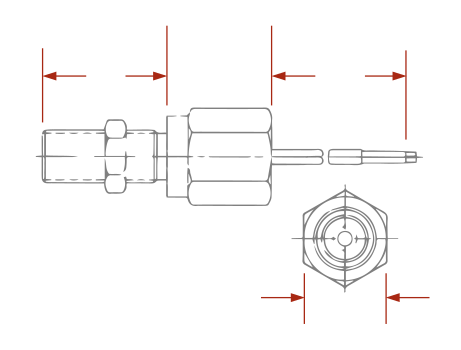
AI-Tek Instruments (formerly Airpax) manufactures hundreds of different designs of magnetic speed sensors and has been supplying these sensors to the industrial, machine tool, petrochemical and aerospace industries for over sixty years.
Many of the speed sensors offered by AI-Tek are designed for special applications that allow us to offer a highly versatile and flexible product line. Browse the speed sensor offerings below.

Control and protection circuits have relied on variable reluctance technology for years. With few components and no moving parts, passive magnetic sensors from AI-Tek Instruments provide consumers with an easy to install, flexible and highly accurate products that are ideal for providing a signal from the inside of an aircraft engine or the hub of an automobile wheel.
View Passive Sensors
AI-Tek has dedicated years of experience and time to designing and manufacturing Hall Effect sensors for Automotive, Military, Petro-Chem, Industrial, Rail, Power Generation and Marine and put that know-how into every sensor we make.
View Active Sensors
AI-Tek offers a variety of speed sensor accessories for you convenience, including connectors and cable assemblies, split and solid gears, sensor mounting brackets and more. These accessories are recommended to ensure that your speed sensors operate at peak performance.
View AccessoriesNot sure which speed sensor makes sense for your application? Use the AI-Tek Product Finder to find out.
Use the AI-Tek calculator to ensure that your sensor selection will produce enough output for your application.
Are you ready to make a purchase or looking for more information on a specific product? Get in touch with someone from AI-Tek or find a distributor near you. If you have a unique, special requirement that cannot be met with any of the standard options, contact us to learn more about custom sensor options.

© 2026 Ai Tek
All rights reserved.
Website designed by WORX.
152 Knotter Drive, PO Box 748
Cheshire, CT 06410-0748